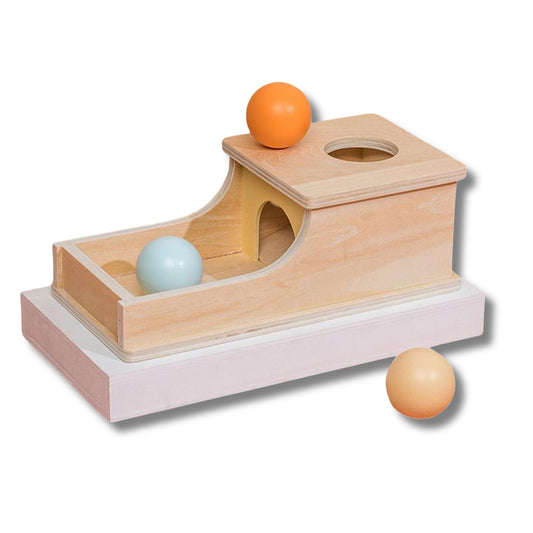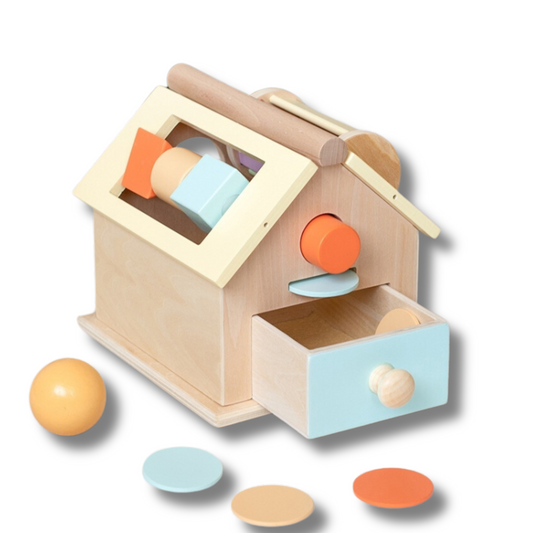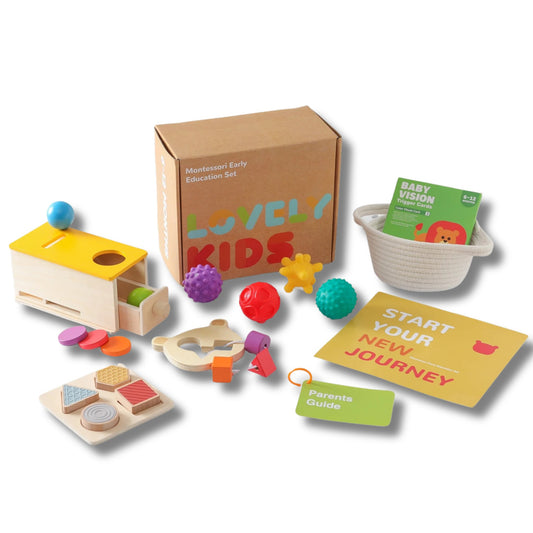
Collection: Montessori Wooden Toys
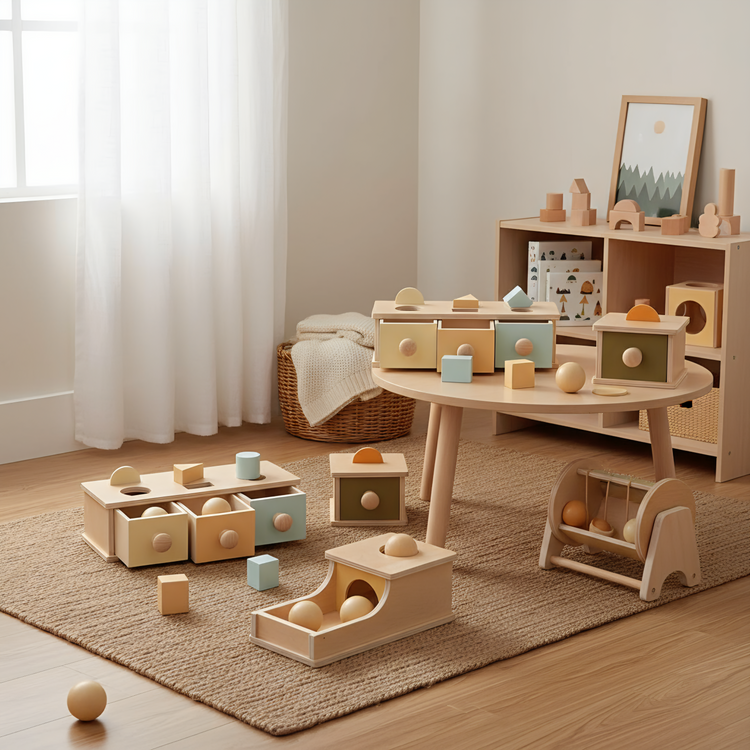
Foster your baby's and child's learning, growth, fine and gross motor skills and creativity with our Montessori Wooden Toys.
Discover the enchanting world of Montessori Wooden toys, where nature meets education to nurture your child's growth and development. Crafted from sustainable wood, these wooden toys offer a natural alternative to plastic, ensuring a safer and eco-friendly play environment for your little one.
Designed to inspire open-ended play and exploration, these toys encourage children to think outside the box, experiment with different possibilities, and express themselves freely. Give your child the gift of independence, exploration, and creativity by fostering a sense of curiosity and imagination.
Order your Montessori Toy Set today and start fostering your baby's potential for a brighter future.
-
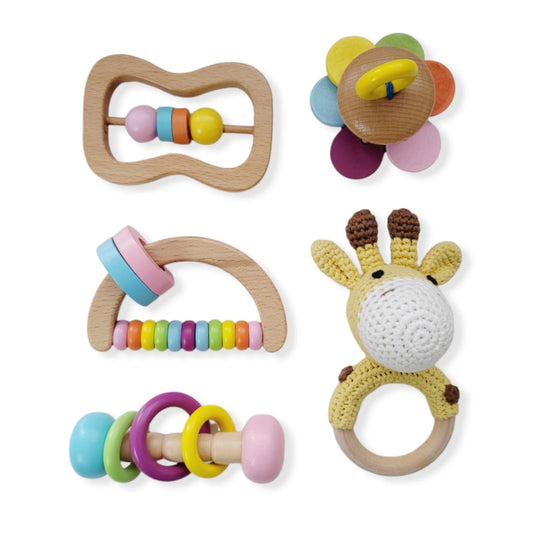
Sold outMontessori Wooden Baby Toy Set™
Regular price $39.97 USDRegular price$79.94 USDSale price $39.97 USDSold out -
4 in 1 Wooden Montessori Toy House
Regular price $45.95 USDRegular price$91.90 USDSale price $45.95 USDSale -
Hunny Montessori Spinning Drum™
Regular price $35.95 USDRegular priceSale price $35.95 USD -
HBK Montessori Baby Toy Box Kit™
Regular price $69.95 USDRegular price$139.90 USDSale price $69.95 USDSale -
Bubba Object Permanence Box™
Regular price From $28.95 USDRegular price$57.91 USDSale price From $28.95 USDSale
FAQs
Are your wooden toys safe? What kind of paint and materials do you use?
Yes, the safety of your child is our highest priority. All of our toys are crafted from high-quality, sustainably sourced wood like beech or birch.
We use only non-toxic, water-based paints and child-safe finishes. Always supervise young children and check regularly for loose parts or wear.
How do I choose the right Montessori toy for my child's age?
The key is to "follow the child" and their current developmental stage. As a general guide:
Infants (0-12 months): Focus on sensory development and grasping. Think wooden rattles, object permanence boxes, and simple knobbed puzzles.
Young Toddlers (1-2 years): Introduce toys that refine motor skills. Stacking rings, chunky puzzles, and shape sorters are perfect.
Older Toddlers (2-3+ years): Encourage practical life skills and problem-solving. Consider threading beads, simple building blocks, and practical life sets (like pouring or sweeping).
At what age can my child start using Montessori toys?
Montessori toys are available for every stage, from birth through elementary years. There are specific toys designed for infants, toddlers, and preschoolers, supporting various developmental milestones by age group.
Why are Montessori toys often more expensive?
The price reflects the quality of the materials and craftsmanship. Our toys are made from solid, sustainable wood rather than cheap plastic.
They are designed for durability to withstand years of play and can often be passed down through families. You are investing in a safe, high-quality developmental tool, not a disposable toy.
What exactly makes a toy a "Montessori toy"?
Montessori toys are simple, open-ended toys made mostly from natural materials such as wood, designed to foster independent, hands-on exploration and learning by aligning with the Montessori educational philosophy
Key characteristics include:
- Simplicity and Purpose: It's often made from a single, natural material (like wood) and focuses on developing one specific skill at a time.
- Realism: It's rooted in reality and avoids distracting features like flashing lights or electronic sounds.
- Child-Led: It encourages open-ended play, problem-solving, and creativity, allowing the child to explore and learn at their own pace without needing adult direction.
What are the main benefits of Montessori toys compared to regular plastic toys?
The benefits focus on holistic child development. Montessori toys are designed to:
- Build Concentration: Their simple, purposeful design helps children focus for longer periods.
- Develop Fine Motor Skills: Activities like stacking, sorting, and grasping refine hand-eye coordination.
- Encourage Independence: They are self-correcting, allowing children to identify and fix their own mistakes without intervention.
- Promote Cognitive Growth: They introduce concepts like cause-and-effect, object permanence, and spatial reasoning in a tangible way.
To learn more about the benefits, read these two blogs:
Our Blog
View all-
Nursery Design Trends: How to Match Your Baby’s...
Designing a nursery is one of the most profound milestones of your pregnancy journey. It is the first physical space you curate for your little one, serving as a sanctuary...
Nursery Design Trends: How to Match Your Baby’s...
Designing a nursery is one of the most profound milestones of your pregnancy journey. It is the first physical space you curate for your little one, serving as a sanctuary...
-
Fleece vs. Minky vs. Cotton: How to Choose the ...
Choosing a baby blanket in 2026 isn't just about picking a cute pattern—it’s about finding the perfect balance of warmth, breathability, and "snuggle-ability." As a parent, you want a fabric...
Fleece vs. Minky vs. Cotton: How to Choose the ...
Choosing a baby blanket in 2026 isn't just about picking a cute pattern—it’s about finding the perfect balance of warmth, breathability, and "snuggle-ability." As a parent, you want a fabric...
-
How To Choose The Best Personalized Baby Blanke...
A baby’s first blanket is more than just a piece of fabric; it's a source of comfort, a companion for their earliest adventures, and a tangible piece of their childhood...
How To Choose The Best Personalized Baby Blanke...
A baby’s first blanket is more than just a piece of fabric; it's a source of comfort, a companion for their earliest adventures, and a tangible piece of their childhood...